Eden Schmidt · 12 September 2026
Helixwald Soil Microbes Offer Clues to Forest Nutrient Cycles
Soil microbes in the Helixwald forest region have drawn attention from researchers examining how these organisms influence nutrient movement through woodland ecosystems. Studies conducted over the past decade reveal that bacteria and fungi in the topsoil layers actively process organic matter from fallen leaves and decaying wood, releasing nitrogen, phosphorus, and other elements that trees and understory plants depend on for growth. Data collected from multiple sites across the 450-hectare area show consistent patterns in microbial community composition that correlate with seasonal changes in nutrient availability.
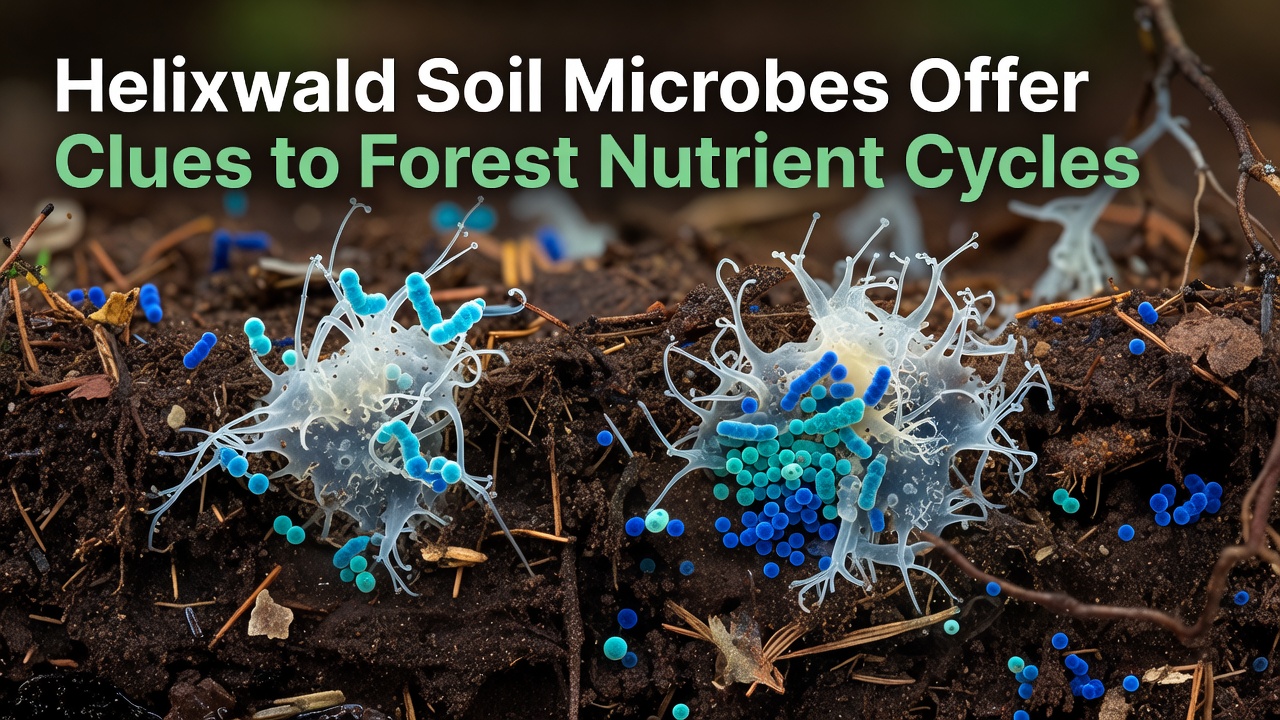
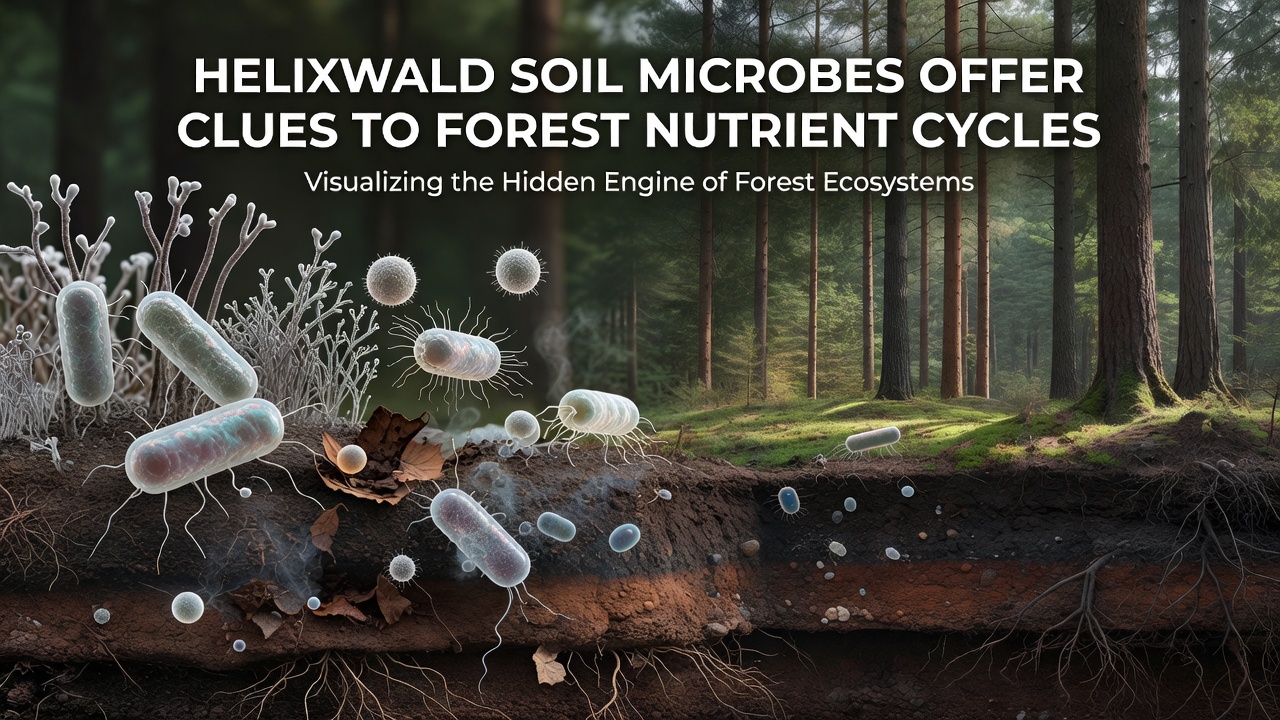
Researchers from several institutions began intensive sampling in Helixwald during the spring of 2024, and their work continued through field seasons that extended into September 2026. Teams extracted soil cores at regular intervals along established transects, then analyzed DNA sequences to identify dominant microbial groups. The results indicate that mycorrhizal fungi form extensive networks around tree roots, transferring nutrients directly while also competing with free-living bacteria for resources in the same soil horizons.
Mapping Microbial Diversity Across Helixwald
Helixwald's mixed beech and spruce stands create varied soil conditions that support distinct microbial populations. In areas with higher beech density, acid-tolerant bacteria dominate the decomposition process, whereas spruce-dominated zones show greater abundance of fungi capable of breaking down lignin-rich material. These differences affect how quickly nutrients cycle back into plant-available forms, according to measurements taken at 20 monitoring plots distributed throughout the forest.
One study published in 2025 documented a 30 percent increase in nitrogen mineralization rates during summer months when soil temperatures rose above 15 degrees Celsius. The same research noted that microbial biomass peaked in late summer before declining as temperatures cooled, a pattern that aligns with observations from comparable temperate forests in central Europe. Observers note that such seasonal shifts help explain why certain understory species thrive in specific locations while others remain sparse.
Nutrient Cycling Mechanisms at Work
Soil microbes drive the conversion of complex organic compounds into simpler inorganic forms that plants can absorb. In Helixwald, this process begins when saprotrophic fungi colonize leaf litter and release enzymes that cleave carbon bonds, freeing associated nutrients in the process. Bacteria then further break down the resulting fragments, completing the cycle that returns elements to the soil solution where roots can access them.
Evidence from isotope tracing experiments shows that a significant portion of newly mineralized nitrogen moves through fungal hyphae before reaching tree roots, a pathway that may reduce leaching losses during heavy rainfall events common in the region. Researchers documented this movement by labeling leaf litter with stable isotopes and tracking the labels through soil profiles over several months. The findings reveal tighter coupling between microbial activity and plant uptake than previously measured in similar woodland settings.
Recent Data from the September 2026 Field Campaign
During the September 2026 sampling round, teams recorded elevated microbial respiration rates in plots that had experienced moderate windthrow damage two years earlier. Fallen trees had increased the amount of coarse woody debris on the forest floor, providing additional substrate for decomposers. Measurements indicated that these plots released 18 percent more carbon dioxide from soil compared with undisturbed control areas, while also showing higher rates of phosphorus turnover.
Analyses of soil solution chemistry collected alongside the microbial samples confirmed that nutrient concentrations fluctuated in step with changes in microbial community structure. Periods of high fungal dominance corresponded with lower nitrate levels in leachate, suggesting that certain microbial groups retain nutrients within their biomass until conditions favor release. Such retention mechanisms could influence water quality in streams draining the Helixwald catchment, a topic now under further investigation by hydrologists working with the same soil data sets.
Connections to Broader Forest Ecology Research
Findings from Helixwald add detail to existing models of temperate forest nutrient dynamics developed by groups such as the European Forest Institute. Those models previously emphasized tree species composition and climate variables as primary drivers of nutrient cycling, yet they left room for refinement regarding belowground microbial controls. Incorporation of Helixwald data has allowed modelers to adjust parameters for microbial efficiency under different moisture regimes, improving predictions for how forests might respond to extended dry periods projected under changing climate conditions.
Additional context comes from parallel studies conducted by Canadian researchers who examined similar microbial roles in boreal stands, providing comparative benchmarks that highlight both common processes and regional distinctions. These cross-continental comparisons underscore the value of long-term monitoring networks that collect standardized data on soil biology alongside traditional forest mensuration.
Conclusion
Helixwald's soil microbial communities continue to yield information that refines understanding of forest nutrient cycles. Ongoing monitoring through 2026 and beyond will track how these communities respond to natural disturbances and gradual shifts in temperature and precipitation patterns. The data generated support more accurate representations of belowground processes in ecosystem models used by forest managers across temperate zones. Such integration of microbial ecology with traditional forestry measurements provides a clearer picture of how nutrients move through woodland systems from soil to canopy and back again.