Ellis Werner · 26 September 2026
Helixwald's Mycorrhizal Networks Reveal Hidden Links Between Tree Species and Soil Stability
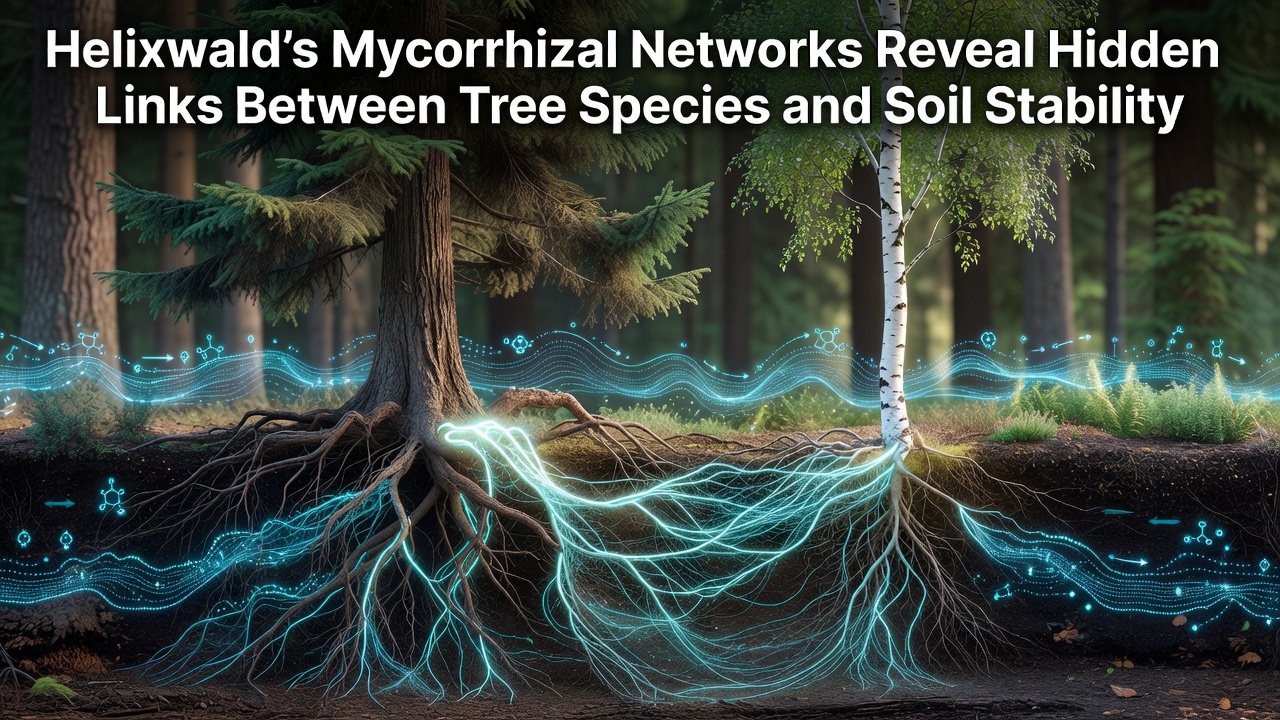
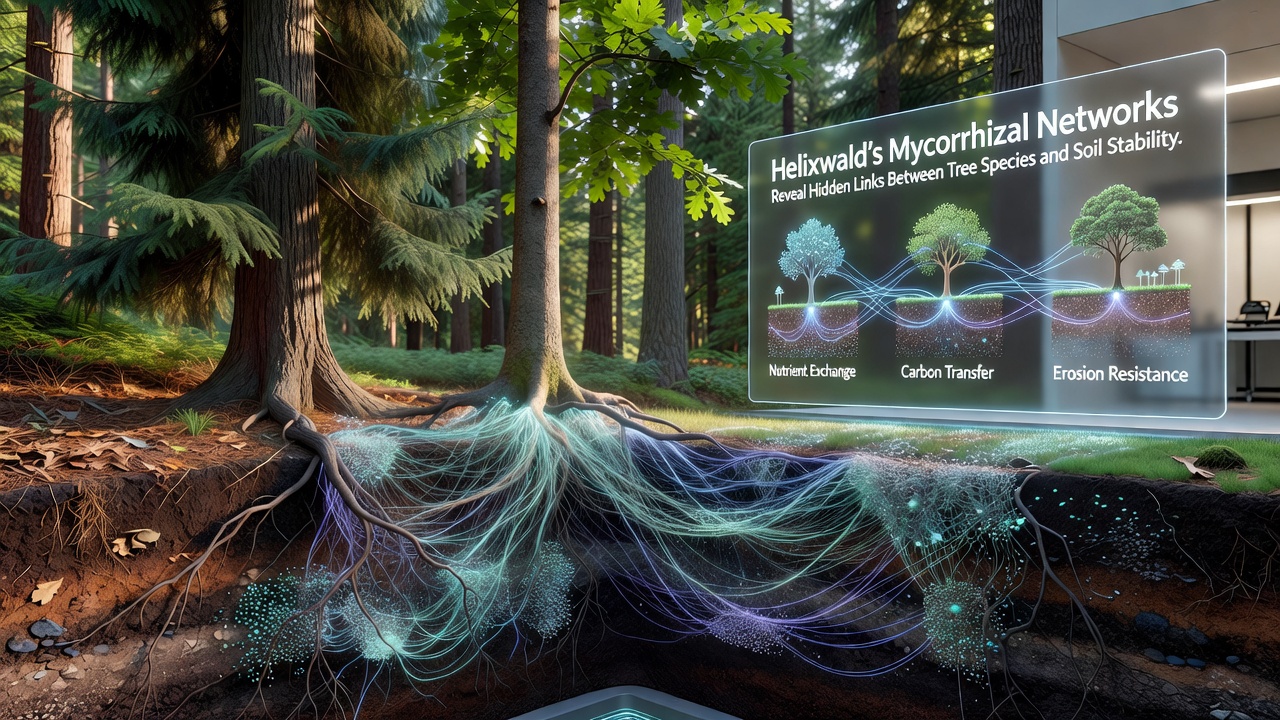
Researchers working in the Helixwald region have documented extensive mycorrhizal networks that link multiple tree species while simultaneously reinforcing soil structure against erosion and compaction. These fungal connections, formed primarily by arbuscular and ectomycorrhizal fungi, extend across root systems and create pathways for nutrient and water exchange that researchers tie directly to measurable gains in soil aggregate stability.
Data collected over multiple field seasons shows that stands with higher mycorrhizal diversity maintain soil shear strength values up to 35 percent greater than plots where fungal connections were experimentally reduced. The networks appear to distribute carbon compounds from canopy species such as beech and oak into understory roots, which in turn release glomalin and other glycoproteins that bind mineral particles into stable aggregates.
Network Mapping and Species Interactions
Scientists used stable isotope tracing and high-throughput DNA sequencing to map connections among more than twenty tree species in permanent plots established across Helixwald slopes. Results indicate that ectomycorrhizal fungi associated with conifers frequently colonize the same mycelial strands that link deciduous roots, creating shared pathways for phosphorus and nitrogen transfer during seasonal drought periods. One study released in September 2026 reported that carbon fixed by mature spruce moved through these common networks into adjacent maple saplings within seventy-two hours of labeling.
Observers note that the density of extraradical hyphae correlates strongly with soil penetration resistance readings taken at ten-centimeter depth intervals. Where hyphal length exceeded four hundred meters per gram of soil, surface runoff during simulated rainfall events dropped by nearly half compared with control areas lacking intact fungal bridges.
Soil Stability Measurements and Supporting Evidence
Soil scientists at regional institutions have paired aggregate stability tests with root and hyphal counts to quantify how mycorrhizal presence alters physical properties. Wet-sieving protocols applied to samples from Helixwald revealed that macroaggregates greater than two millimeters comprised 62 percent of total soil mass in network-intact zones versus 41 percent in areas where fungicide treatments disrupted mycelium. These differences persisted across both clay-rich and sandy loam textures found on the site.
According to figures published by the European Environment Agency, forests exhibiting comparable fungal connectivity demonstrate reduced landslide susceptibility on slopes between fifteen and thirty degrees. Helixwald data align with those broader patterns, showing that tree species mixtures supported by shared mycorrhizal networks maintain higher root cohesion values than monoculture stands of similar age and density.
Implications for Forest Management Practices
Forestry agencies in several countries have begun incorporating mycorrhizal considerations into thinning and replanting guidelines. Canadian Forest Service protocols now recommend preserving legacy trees that serve as network hubs when designing harvest blocks, a practice that parallels observations made at Helixwald. Australian researchers at CSIRO have reported parallel findings in eucalypt systems where fungal links between species improved post-fire soil recovery rates.
Helixwald plots subjected to selective removal of mid-canopy individuals showed temporary declines in hyphal density followed by gradual recovery once remaining trees re-established connections through existing mycelium. The timeline for recovery averaged fourteen months when at least three compatible host species remained within a fifteen-meter radius of disturbed areas.
Conclusion
Long-term monitoring at Helixwald continues to track how changes in tree species composition and fungal community structure influence soil physical properties over successive growing seasons. The accumulated evidence points to mycorrhizal networks as functional links that simultaneously facilitate resource sharing among trees and contribute measurable reinforcement to soil matrices. Ongoing work focuses on scaling these plot-level observations to landscape models that forest managers can apply when planning for stability under changing climate conditions.