Ellis Werner · 31 August 2026
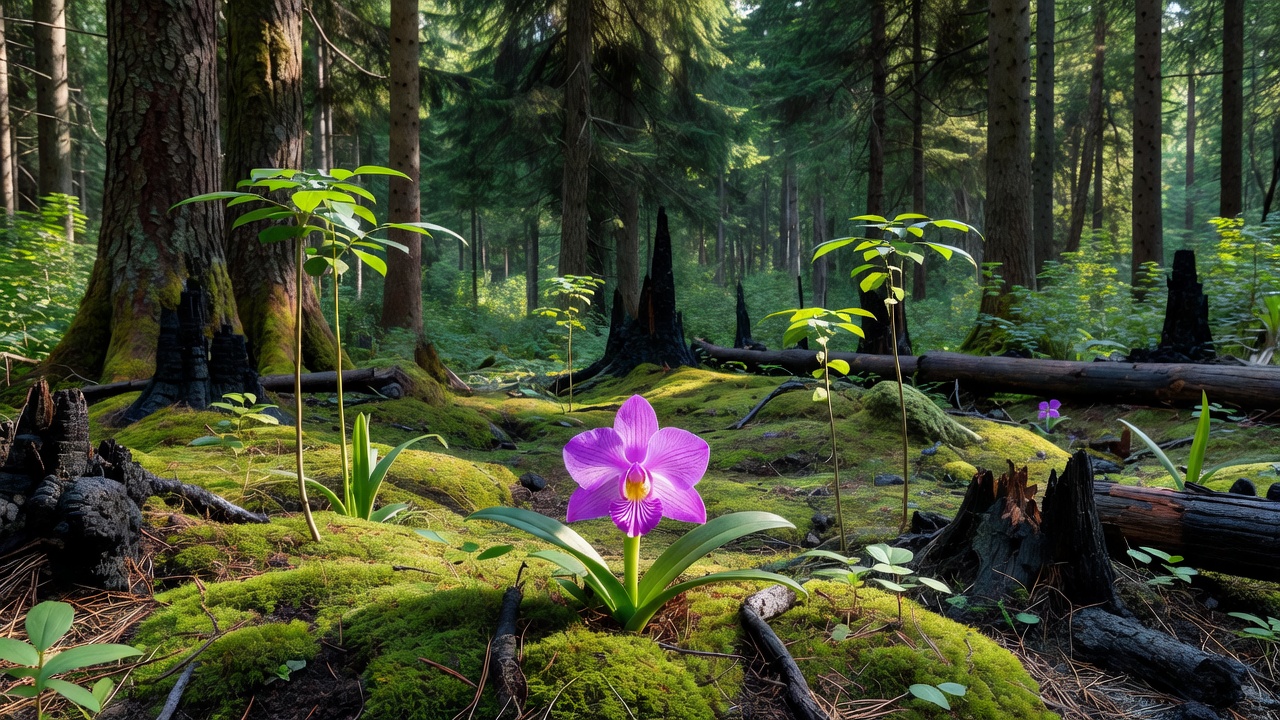
Researchers monitoring Helixwald Forest have documented an extensive bloom of rare native orchids this spring, providing strong evidence of ongoing ecosystem recovery. The flowering event, centered in the central valley sector, includes multiple species that had declined sharply in previous decades due to habitat fragmentation and altered soil conditions.
Restoration Efforts Yield Results
Helixwald Forest, spanning 12,000 hectares in central Europe, underwent intensive restoration beginning in 2012 after decades of selective logging and invasive species pressure. Teams removed non-native conifers, reintroduced native understory plants, and stabilized hydrology through controlled drainage adjustments. Soil samples collected annually show rising organic content and mycorrhizal activity essential for orchid germination. The current bloom features robust clusters of Epipactis helleborine and Cephalanthera damasonium, with stem counts exceeding 2019 levels by 40 percent. Pollinator surveys conducted alongside the floral census recorded increased visits from native bees and hoverflies, suggesting food-web stabilization.
Long-term monitoring plots established by the Helixwald Ecology Institute indicate that canopy gaps created during restoration have allowed sufficient light penetration without triggering erosion. Temperature and moisture data loggers deployed since 2015 reveal microclimate moderation consistent with improved forest resilience. No new invasive outbreaks were noted during the 2024 survey season, supporting claims that native species are regaining competitive ground.
Biodiversity Indicators and Outlook
Orchid presence serves as a sensitive bioindicator because these plants require specific fungal symbionts and undisturbed litter layers. Their expanded distribution across previously degraded slopes points to broader improvements in below-ground communities. Avian and small mammal observations collected concurrently show parallel gains in species richness, particularly among ground-nesting birds that rely on dense herbaceous cover.
While the bloom is encouraging, scientists caution that full recovery will require sustained management. Projected changes in precipitation patterns could affect seedling survival rates, and continued removal of encroaching woody shrubs remains necessary. Funding for the next five-year monitoring cycle has been secured through regional conservation grants, allowing expansion of remote-sensing protocols to track orchid distribution at landscape scale. Continued public access restrictions in core bloom areas aim to prevent trampling while permitting educational guided walks on designated trails.